| Livestock Disease Summaries | नेपाली भाषा |
Fungal Toxins in Feed (Mycotoxicosis)
Fungi - often called molds - are everywhere. It is difficult to find hay, grasses or grains that do not have some fungus contamination. However, feeds that have specific types of mold or have a large amount of mold in them can cause major problems to livestock that consume them. The mold can be on grain, hay, or grasses. Problems can even occur when bedding his highly contaminated with molds.
There are many different types of fungi that can grow on feed. Some fungi produce toxins called mycotoxins and others simply grow on feed and do not produce serious toxins. Fungi that do not produce potent toxins can still cause disease in several ways:
- They decrease palatability of the feed so that animals do not eat as much as they should.
- Growth of fungi on feed decreases its nutrient quality so that the feed is less nutritious.
Several types of fungi produce highly poisonous mycotoxins and feeding those to any type of livestock - chickens, goats, cattle, pigs and others - can cause very serious diseases. Some examples:
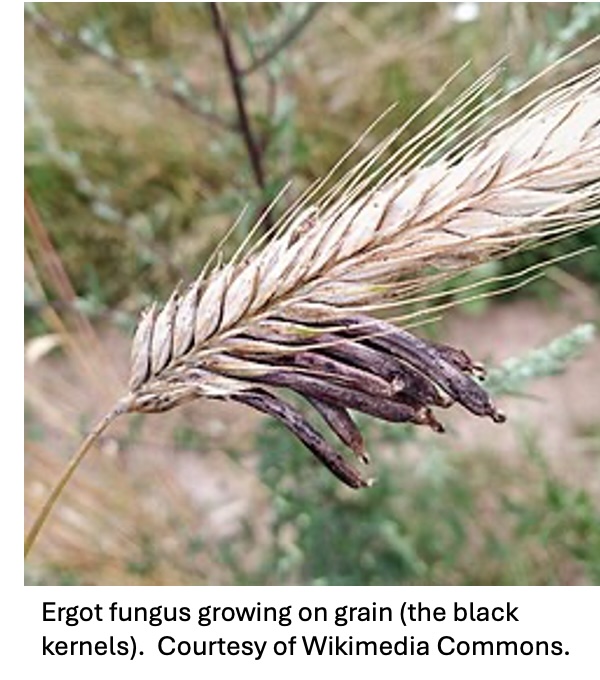
- Ergot fungi: this fungus infects several types of grains, including rye, wheat, and barley. They also infect grasses. Infection of grain is often easy to detect because the fungus produces black grains among the normal grain kernels as seen in the image to the right.
Consumption of the ergot toxin causes constriction of the muscles surrounding arteries, which results in restricted blood flow. This results in death of tissues, most commonly the tip of the tail or tips of the ears. Another common sign is lameness due to restriction of blood flow to the hooves. - Aflatoxins are produced by a type of fungus called Aspergillus. This toxin causes serious damage to the liver. Clinical signs are not specific and diagnosis usually depends on detecting the fungus in feed or doing pathology.
- Several other fungal toxins can contaminate feed and cause disease. For example there is a fungus that produces as toxin that acts like estrogen and animals that consume this toxin can show a swollen vulva or mammary gland.
Recommendations if you have moldy feed:
- The best thing to do is to avoid feeding moldy feed to livestock, but this is not always possible.
- If you have moldy feed, avoid feeding it to pregnant or young animals.
- If you are feeding moldy feed to your animals and they show signs of disease, stop feeding that material and get feed that is not moldy.
 Back to Index Back to Index |
Send comments to rabowendvm@gmail.edu