| Livestock Disease Summaries | नेपाली भाषा |
Hardware Disease (Traumatic Reticulitis)
Cows are not very careful about what they eat and sometimes will eat things like nails, screws and wires ("hardware") that are accidentally present in their feed. Some of these pieces of metal have sharp, pointed ends that can puncture their digestive tract and cause major problems.
In order to understand this problem, you need to know what the digestive tract of a ruminant looks like. This is shown in the diagram below, looking at the cow (or goat or sheep) from the right side. Notice that the front compartment of the rumen is called the reticulum. The reticulum lies directly underneath where the esophagus enters the rumen and is therefore where heavy objects like metal fall and accumulate. If you want to learn more about the digestive anatomy of a ruminant, visit Digestive Anatomy in Ruminants
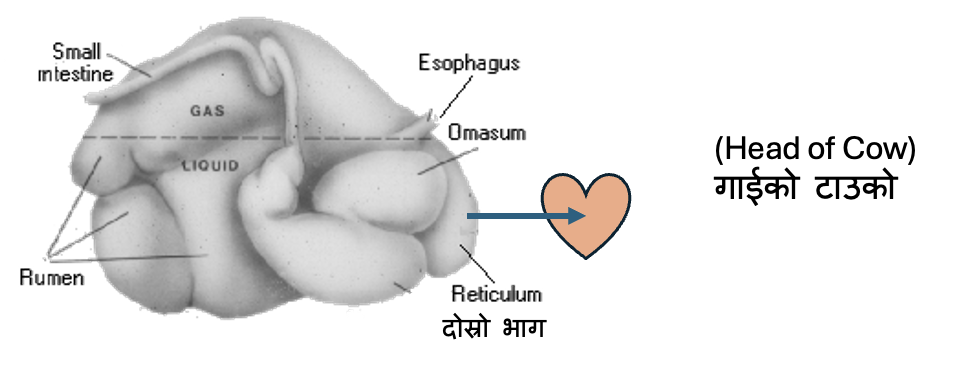
What is the problem if a cow eats metal? If they eat something like a coin that is smooth, there will rarely be any problem. However, nails, screws and wire have sharp points and will often puncture the reticulum. When this happens, the liquid from the reticulum leaks out into the abdominal cavity and causes a local infection and major inflammatory reaction - this is technically called traumatic reticuloperitonitis.
Now, look at the diagram above and notice that the heart is very close to the reticulum. If the wire or nail that punctures the reticulum migrates into the chest cavity and punctures the heart, the cow will very likely die. This condition is called traumatic reticulopericarditis and essentially a death sentence for the cow.
Clinical Signs and Diagnosis of Hardware Disease
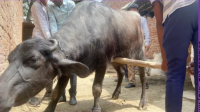
Acute disease is seen early when the reticulum is first punctured by a piece of metal. Cows in this stage have decreased rumen motility, poor appetite, and often show a hunched appearance with their back raised. They walk carefully and often show signs of pain such as grunting or grinding their teeth. The animal's body temperature is usually high and in dairy animals, milk production can decrease dramatically.
One method for diagnosing hardware disease is the "pole test", where a poll of some type is placed under the animal just behind the shoulders and two people lift up on the pole - if the animal has hardware disease, it usually displays pain when that is done. Other more sophisticated tests such as ultrasound or radiography can also be used.
Chronic disease is seen in animals that have passed the acute stage and are living with the disease. These animals frequently loss weight, have decreased aoppetite, decreased rumen motility and generally have poor healtlh.
If the metal object punctures the liver or heart, the cow can become severely ill and die rapidly.
Preventing Hardware Disease
The easiest way to prevent hardware disease is to avoid having pieces of metal get into feed. Be careful not to drop nails or screws into hay or other feed that cattle may eat.
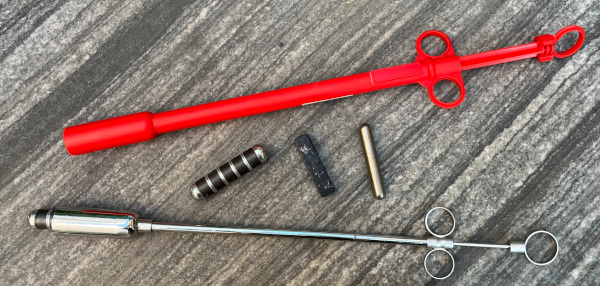
Preventing pieces of metal from getting into feed is not always easy. Another method to prevent hardware disease is to trap pieces of metal within the reticulum so that they do not puncture the wall of that organ. The method commonly used is to insert a magnet into the reticulum. This may sound difficult but is actually very easy. Rumen magnets are commercially available in several styles, as shown in the figure below. They are administered with that is called a "balling gun", also shown below. A magnet is first inserted into the end of the balling gun. Next you hold the cow's mouth open by inserting your hand and pressing on the roof of her mouth. The gun is then inserted deep into the mouth, making sure it is past the base of the tongue. The plunger on the gun is then used to expel the magnet into the back of the animal's throat and most of the time, she will swallow it - hold her head up and if she spits up the magnet, try again. Magnets will often stay in the reticulum for the life of the cow.
The image below shows two types of balling guns and three types of rumen magnets.
Rumen magnets do not eliminate pieces of metal, but trap them on the magnet and, most of the time, prevent them from puncturing the reticulum.
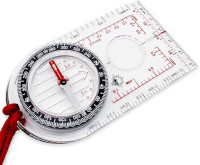
If you do not know if a cow has already received a magnet, you can hold a compass under the cow in the region beneath the reticulum and as you move the compass, the needle will jump around due to the presence of the magnet. If there is no movement of the compass needle, the cow probably does not have a magnet.
Removing rumen magnets is not usually something you want or need to do and is very difficult without surgically opening up the rumen to retrieve the magnet.
Treating Hardware Disease
If hardware disease is diagnosed, the first thing to try is to administer a rumen magnet as described above, and to treat the animal with broad spectrum antibiotics and pain killers. If that treatment is successful, the fever should decrease and the animal should start feeling better.
Removing metal pieces from the reticulum usually requires surgery by a skilled veterinary surgeon. This is not an easy procedure and if the disease is chronic, the animal may never fully recover.
 Back to Index Back to Index |
Send comments to Richard.Bowen@colostate.edu