| VIVO Pathophysiology | Digestive System |
Digestive Function in Diverse Mammals
Evolution has generated an abolutely stunning diversity of mammals that have fascinating differences in outward appearance and lifestyles. Clearly, there are interesting differences among mammals in their digestive anatomy (witness cats versus cows), but the basic function and architecture of their digestive systems are actually quite similar.
Land Mammals You May Have Wondered About
| Animal | Description of Digestive System | Most Similar To | |
|---|---|---|---|
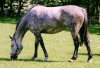
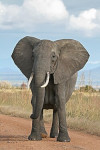 | Elephant | There are three living species of elephants: African bush, African forest and Asian elephants. These animals are the largest living land animals. Elephants have a single simple stomach and a huge large intestine, so their digestive tracts are most similar to horses, not like ruminants such as cows. Other intersting features about elephant digestive systems:
|
 |
 | Giraffe and Okakpi |
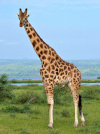
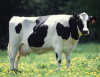
Giraffes are now classified into four species and almost any schoolchild would be able to recognize these unique creatures. Okapi are less well known, but closely related to giraffes. Giraffe's are adapted to browse on tall vegetation like treetops and have little competition in that space from other herbivores. Giraffes are ruminants like cattle. They have three forestomaches called the rumen, reticulum and omasum, followed by a glandular stomach called the abomasum. Of course, giraffes have what is likely the longest esophagus of any living land mammal. A couple of other interesting features of ruminant digestion:
|
 |
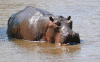 | Hippopotamus | There are two living genera of hippos, each represented by a single species: the common hippo and pygmy hippo. Surprisingly, their closest relatives are cetaceans such as whales. The digestive system of hippos is unique and they are referred to as pseudoruminants. They have a 3-chambered stomach consisting of two forestomachs and a glanular stomach that is similar to all mammals. Thus, the hippo digestive tract is different from both true ruminants like cattle and goats, and different from camelids, which are also referred to as pseudoreminants. The forestomachs of a hippo function similarly to those of ruminants in that foodstuffs definitely undergo fermentation there. However, hippos do not ruminate: they do not regurgitate from their forestomaches, remasticate and reswallow. Like ruminants, they do burp or eructate large amounts of gases produced in the forestomachs. Hippos can open their large mouths to almost a 180o angle and if you ever observe such behavior, you will see that they have very formidable tusks. Hippo tusks are elongated forms of both canine and incisor teeth that are used for both fighting and self-defense. |
|
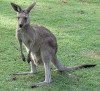 | Kangaroos and Wallabies | Kangaroos and wallabies are closely related marsupial species that, to the non-specialist, differ primarily in size: in essense, wallabies are small kangaroos. Both are marsupials and strict herbivores. These animals have a stomach different from other animals. Contents from the esophagus flow into a forestomach that functions as a fermentation chamber similar to the rumen of a ruminant. Grossly, the forestomach can be seen to have two subcompartments, designated as the sacciform and tubiform segments. Ingesta from the forestomach flow into the "hind stomach", where is where acid and enzymes are secreted. The small intestine of these animals is quite long, and the large intestine relatively short. Kangaroos are famous for being able to go for long periods of time without access to water and the long small intestine may contribute to this capability by allowing time for maximal water absorption. One facinating aspect of forestomach fermentation in kangaroos, and presumably wallabies, is that their microbial population generates substantially less methane that ruminants when fed the same diet. Apparently, the microbes in their forestomach produce much more hydrogen than methane; the hydrogen is converted to acetate and serves as an important energy source for the animal. Methane from ruminants is an important source of greenhouse gas and if cattle could somehow be converted to use the kangaroo foregut fermentation, it might contribute to control of climate change. |
|
Cetaceans (Whales, Dolphins, Porpoises)
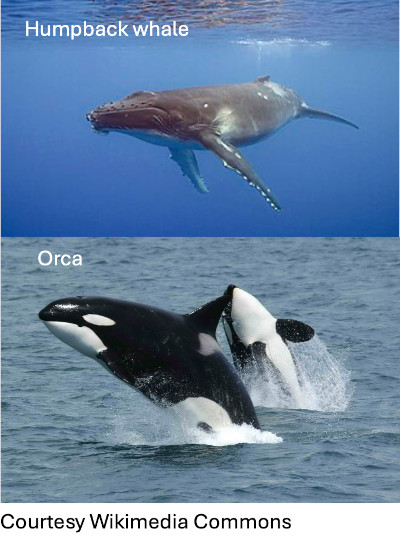
Cetaceans are a large group of marine mammals that vary enormously in numerous features. If you consider just their size, a mature blue whale can weigh up to about 200 tons and is thought to be the largest animal that lives or ever has lived on earth. Compare that to the vaquita, a type of porpoise on the brink of extinction that weights only about 60 kg. Cetaceans are classified broadly into two groups:
- Baleen whales are filter feeders that have plates of baleen (a type of keratin like fingernails) in their mouths that filter huge amounts of water, retaining and swallowing their prey like krill and small fish. Examples include blue, humpback, and gray whales.
- Toothed whales have teeth (there are a few exceptions) that they use to grasp and tear apart prey. Examples include orca (killer whales), sperm whales, dolphins and purpoises.
The digestive system of whales is, as you might expect, not exeptionally well studied, but there is consensus on some features.
In addition to the unique feature of having baleen plates, baleen whales have a three-chambered stomach. The forestomach does not have glands and probably functions as a fermentation chamber somewhat analogous to the rumen of a cow. Downstream of the forestomach is another, two-chambered glandular stomach that secretes acid and digestive enzymes.
Most toothed whales have been described as having a three chambered stomach (forestomach, main and pyloric stomach), but some species appear to have addition stomach chambers.
The intestine of cetaceans is very long compared to most other mammals: roughly 150 meters long in large dolphins and up to 300 meters long in sperm whales.

Of course, any discussion of whale digestion should mention ambergris. Ambergris is a substance that is defecated or possibly vomited from sperm whales. Sperm whales consume giant squid, and those squid have large, indigestible beaks. Usually the whale vomits up such beaks, but sometimes they pass into the intestine and, somehow, the beaks become coated with a waxy substance to protect the intestine from its sharp edges - that substance is ambergris. Chunks of ambergris are defecated, float to the surface, wash up on beaches, and are retrieved by humans. Bizarrely, ambergris is highly valued, especially by perfume makers, for its "intriguing" scent and is exceptionally valuable. The original Chanel #5 perfume had ambergris as one of its components but is now entirely synthetic. Did I mention also that ambergris is flammable? Are humans a bit weird or what?
Monotremes (Platypus and Echidnas)
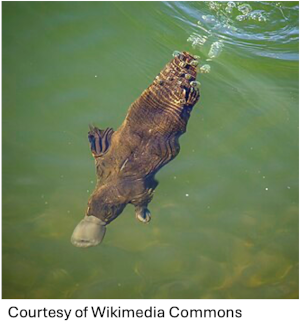
When European zoologists first saw drawings of the duck-billed platypus, they were sure it was a hoax, similar to the mythical jackalope, but the platypus is indeed a real creature that lives exlusively in Australia. The platypus is different from "conventional" mammals in so many ways. First, it looks as if someone grafted a duck's bill onto a beaver. Instead of bearing live young, the platypus lays eggs. After birth, the females do secrete milk through pores in the skin; the young lap up this milk rather than sucking it from nipples. Finally, males are venomous and can deliver a very painful, though non-lethal sting through spurs on their rear legs! Those are only a few of the intriguing and strange features of a platypus.
These animals are semi-aquatic and their diet consists if various aquatic invertebrates such as shrimp, insect larvae and worms. Some of the key features of their digestive system include:
- Adults do not have teeth, but rather have tough grinding pads inside their bills that allow them thoroughly crush their prey prior to swallowing.
- They do not have what you would call a true stomach. The distal part of the esophagus is dilated but it does not secrete acid or enzymes like pepsin due to deletions in genes necessary for those processes (for example, genes encoding pepsinogens and one of the subunits of the H+/K+ ATPase).
- There is not a distinct gross difference between small and large intestine.
- Instead of small intestinal villi, they have flattened folds of epithesial cells that absorb nutrients.
Echidnas, also known as spiny anteaters, are monotremes but physically quite dissimilar from platypuses. Most noticably, they lack a bill and their skin is covered with sharp spines. They feed predominantly on ants and termites and catch those insects with a long, sticky tongue. They are similar to the platypus in that they lay eggs and lack a true stomach.
References
Clauss M, Schwarm A, Ortmann S, Alber D, Flach EJ, et al. Intake, ingesta retention, particle size distribution and digestibility in the hippopotamidae. Comp Biochem Physiol A Mol Integr Physiol. 2004; 139:449-59.
Greene W, Dierenfeld ES, Mikota S. A Review of Asian and African Elephant Gastrointestinal Anatomy, Physiology, and Pharmacology: Elephant Gastrointestinal Anatomy, Physiology, and Pharmacology. J Zoo Aquarium Res. 2019;7, 1–14.
Harrison RJ. The oesophagus and stomach of dolphins (Tursiops, Delplrinus, Stenelk). J Zool, Lond. 1970; 160:377-390
Herwig RP, Staley JT, Nerini MK, Braham HW. Baleen whales: preliminary evidence for forestomach microbial fermentation. Appl Environ Microbiol. 1984; 47:421-3.
Hume I. Microbial fermentation in herbivorous marsupials. Bioscience 1984; 34:435–440.
Krause WJ. Intestinal mucosa of the platypus, Ornithorhynchus anatinus. Anat. Rec. 1975; 181:251-265.
Mitchell G. 'The Machinery of Digestion', In: How Giraffes Work (New York, 2021; online edn, Oxford Academic, 19 Aug. 2021),
Ordoñez GR, Hillier LW, Warren WC, Grützner F, López-Otín C, Puente XS. Loss of genes implicated in gastric function during platypus evolution. Genome Biol. 2008; 9:R81.
 Pathophysiology of the Digestive System Pathophysiology of the Digestive System |
Last updated January 2026. Send comments to Richard.Bowen@colostate.edu